Naval MRO · Malaysia · 2013–2017
Boustead Naval Shipyard: seven late projects, then seven on time
The drawings, the equipment and the workforce were the same across both periods. What changed was the operating structure.
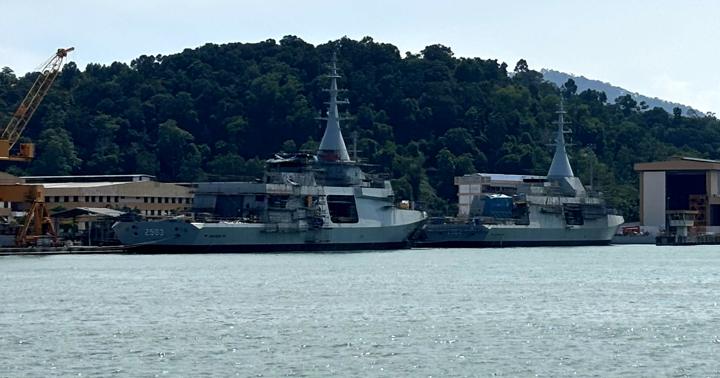
Photo: Hiroki.loh.st, CC BY-SA 4.0, via Wikimedia Commons
- Boustead Naval Shipyard
- Lumut, Perak, Malaysia
- Naval repair and life extension for the Royal Malaysian Navy
- Suh Wan-Chul, Principal Advisor, Proper Mediation Inc.
- The Heartbeat of the Shipyard, Part II
The situation
For eight years before the engagement, Boustead Naval Shipyard had delivered seven naval repair projects for the Royal Malaysian Navy with an average delay of seventeen months. Not one was on time.
On 11 November 2013 the eighth, SLEP-2, the service-life extension of the Kasturi-class corvette KD Lekir, was eleven months from its contract handover of 30 October 2014. Progress stood at 71 percent against a planned 92. Beneath the delay lay something the figures did not show: indifference, and a floor where workers, supervisors and managers waited on one another.
What changed, in order
November 2013
The first inquiry: Ideal Reality
A working group of planners and trade leaders asked how all outfit installation could be finished in three months. The answer was zone-based TACT planning: proper teams in every zone, one team per compartment, each working to its own practice.
Dec 2013 – Jan 2014
Planning as a conversation
Four planners met more than a hundred foremen and supervisors and assembled 499 Detailed Work Procedures across 68 sub-zones and 11 disciplines, about 16,780 man-days of work. The new method went live on 6 January 2014.
January – March 2014
Four times the rate
With an average of 250 workers, 400 at peak, working without stops or interference, the yard did in three months what had taken fourteen before, reaching 95.12 percent: the exact intermediate target.
April – October 2014
The second inquiry: seven months for fourteen
Mechanical completion, setting-to-work, harbour and sea acceptance trials ran in parallel at sub-unit level, led by a task force of 28 or more, with the Navy and equipment makers signing off each unit as it closed. SLEP-2 was handed over a week before the contract date.
2014–2017
A structure of the yard’s own
The yard drew its operating structure as a house: on-time production within budget as the roof, a shared vision as the foundation, and four drivers as pillars: a target-focusing operating system, WORKOUT, Go-and-Check and an in-house school.
SLEP-2 corvette · months
Outfit installation, the same 25% of the work
System integration, mechanical completion to sea trials
Weapon-system installation
The people: from indifference to self-esteem
The yard’s own record named two results, and neither was a productivity figure: regaining self-esteem, and recovering organic vitality.
100+foremen and supervisors who built the plan in conversation with the planners
499Detailed Work Procedures, written to the teams’ own practice
×5more baton-passes between trades during integration than before
28+people in the integration task force, Navy and equipment makers included
Results
| Indicator | Before | After |
|---|---|---|
| Outfit installation, 25% of the work | 14 months | 3 months |
| System integration, MC to SAT | 14 months | 7 months |
| Total production, corvette class | 49 months | 32 months |
| Weapon-system installation | 22 months | 5.5 months |
| Projects delivered on time | 0 of 7 | 7 of 7 |
Before figures are the yard’s record for the preceding fourteen months and the predecessor vessel of the same class.
What lasted
7 of 7naval projects on time from late 2013 to 2017, through two retrenchment cycles
1 weekahead of the contract date for SLEP-2, after eight years without an on-time delivery
“Our capability has exceeded our system.”